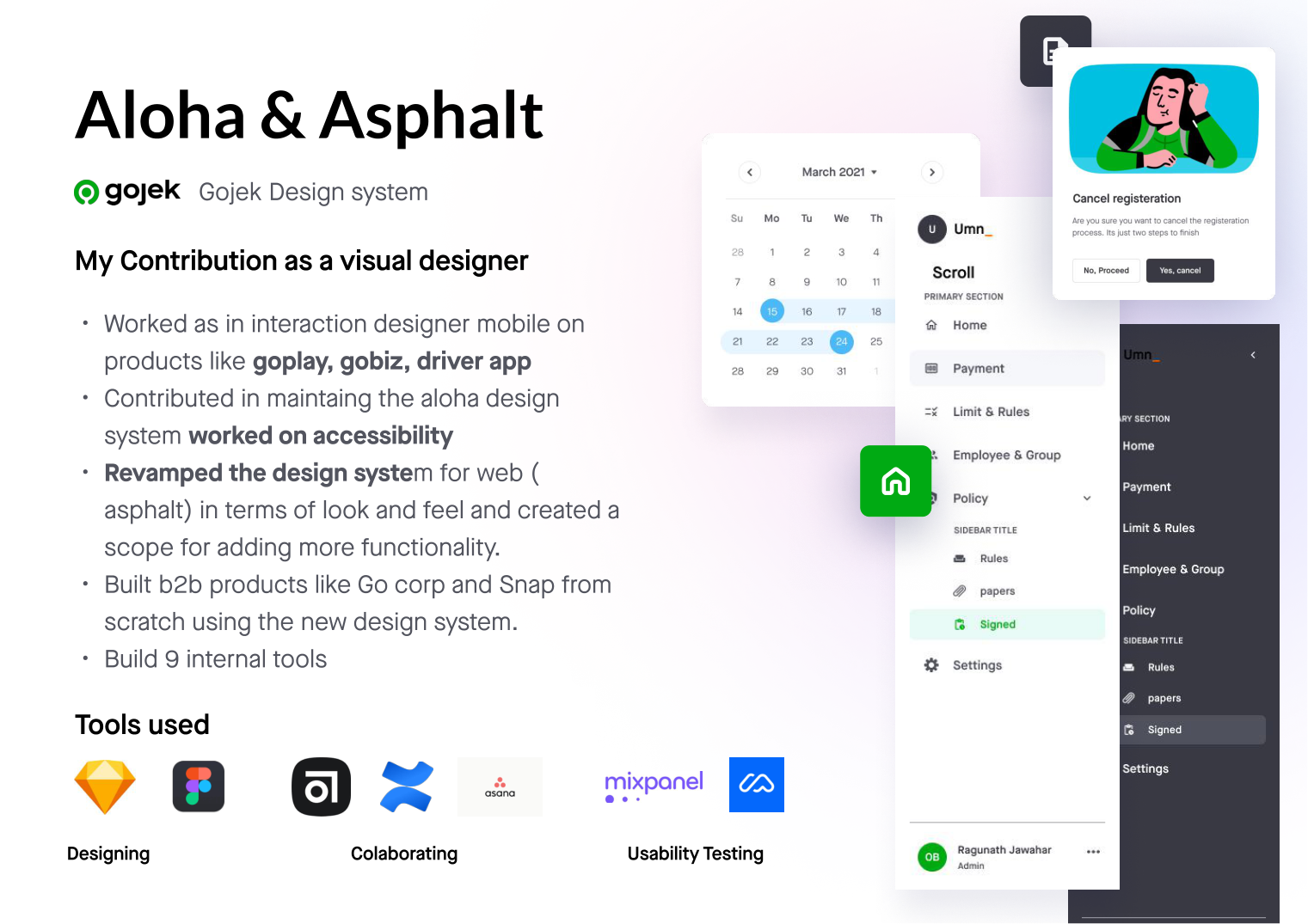
Aloha & Asphalt — rebuilding Gojek's design system from the look-and-feel up into a token-driven, themeable, semantic foundation that 30+ products could trust.
Gojek's design system — a shared token, theming and accessibility foundation powering consumer and driver apps across web and mobile.
Hard-coded hex values and one-off components meant every product drifted. Theming was manual, accessibility inconsistent, and changes didn't scale.
Semantic tokens that describe intent — surface, content, accent — so a single source of truth drives light, dark and brand themes everywhere.
Adopted across 30+ products with 5 token elements and full light & dark support.
Gojek's design system, Asphalt, powered everything from GoFood to the driver app and a fleet of internal B2B tools. But it had grown organically — the system was basic, carrying little beyond an accent and a primary colour tied hard to the brand.
As a visual designer on the DLS team, I was handed the responsibility of revamping the system for web and beyond — taking Asphalt in terms of look and feel, and creating a scope for adding far more functionality. Built B2B products like Go Corp and Snap from scratch on the new system, and shipped 9 internal tools on top of it.
When I took on the DLS, the existing system was holding teams back in concrete ways:
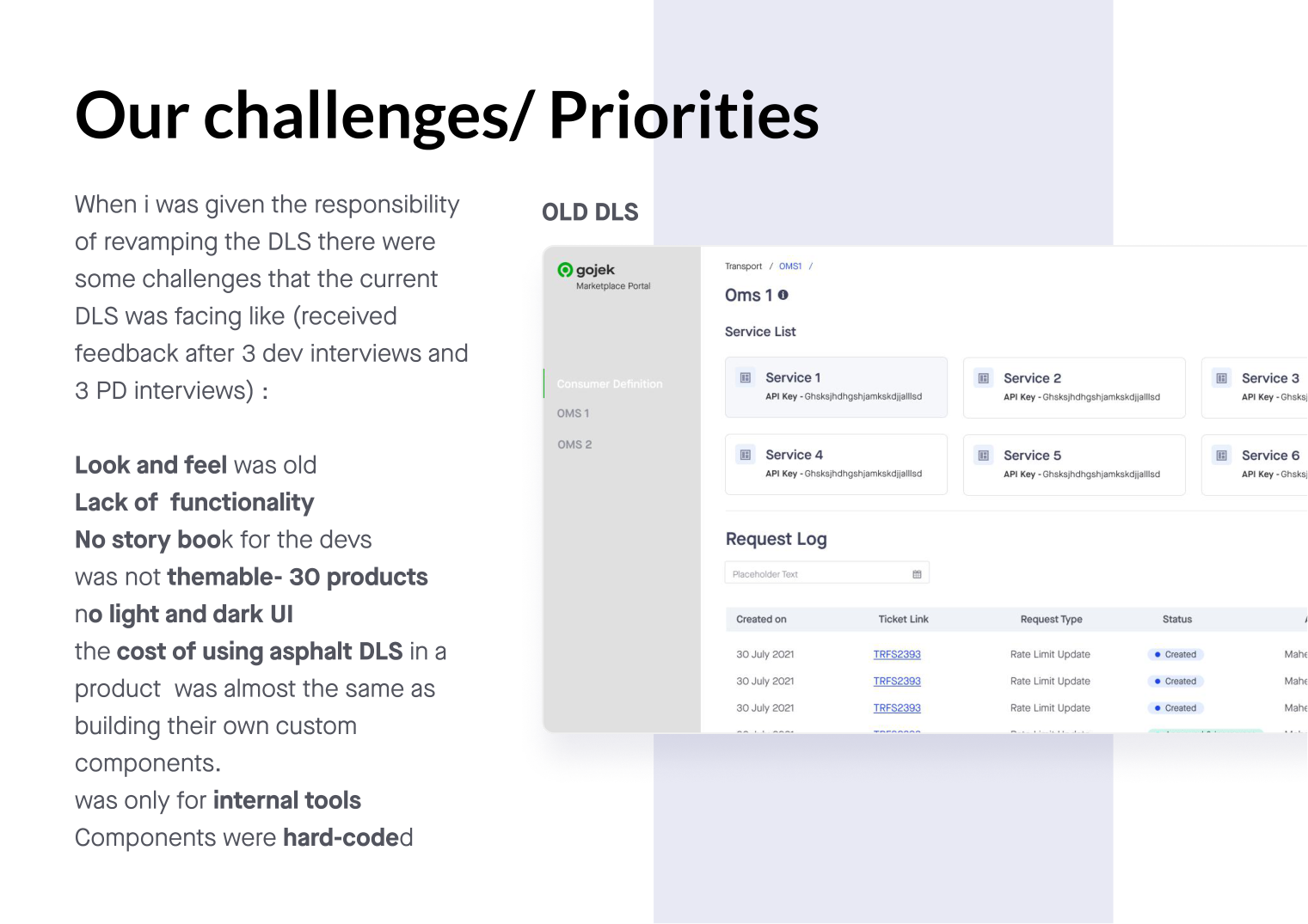
I ran a quick, focused study on the missing functionality and prioritised it by need and satisfaction. I gathered feedback through 3 developer interviews and 3 product designer interviews — the two audiences that lived inside the system every day.
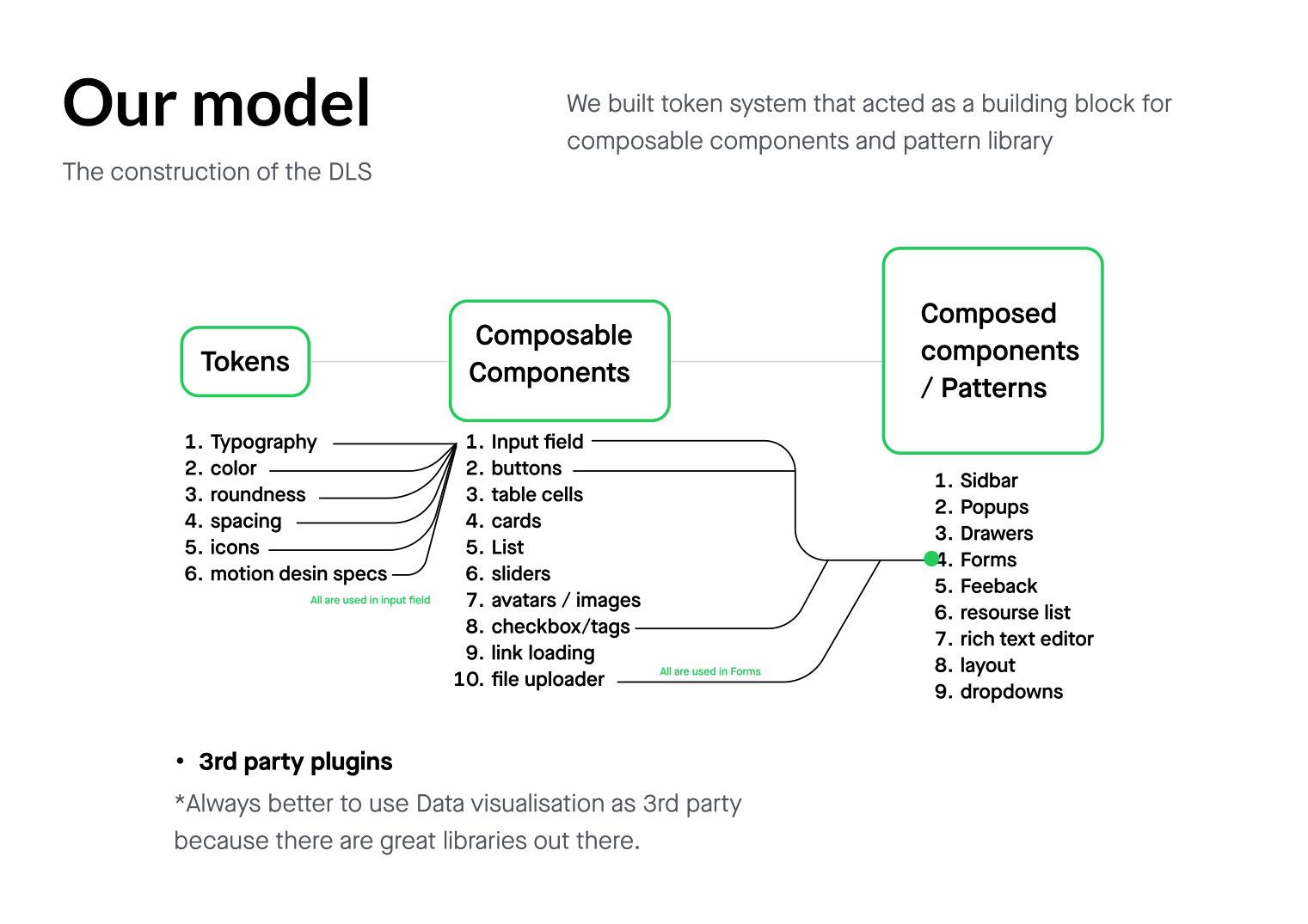
The strategy was to build a token system that acted as the building block for a composable component and pattern library — so the system scaled from atoms to full screens without anyone re-inventing the wheel.
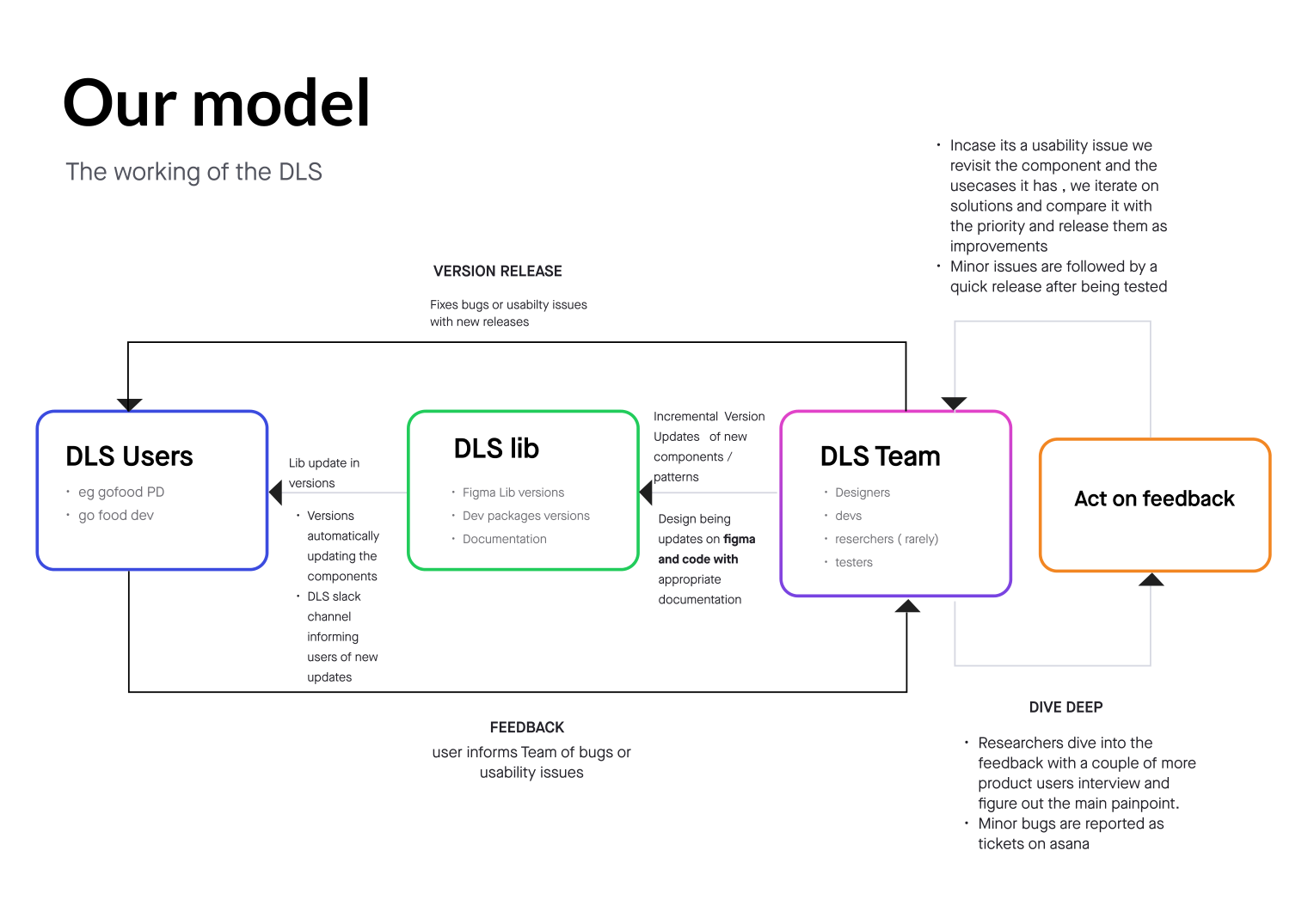
A design system only works if its update loop is legible. I defined how the DLS operated as a product — who consumes it, who maintains it, and how feedback turns into releases.
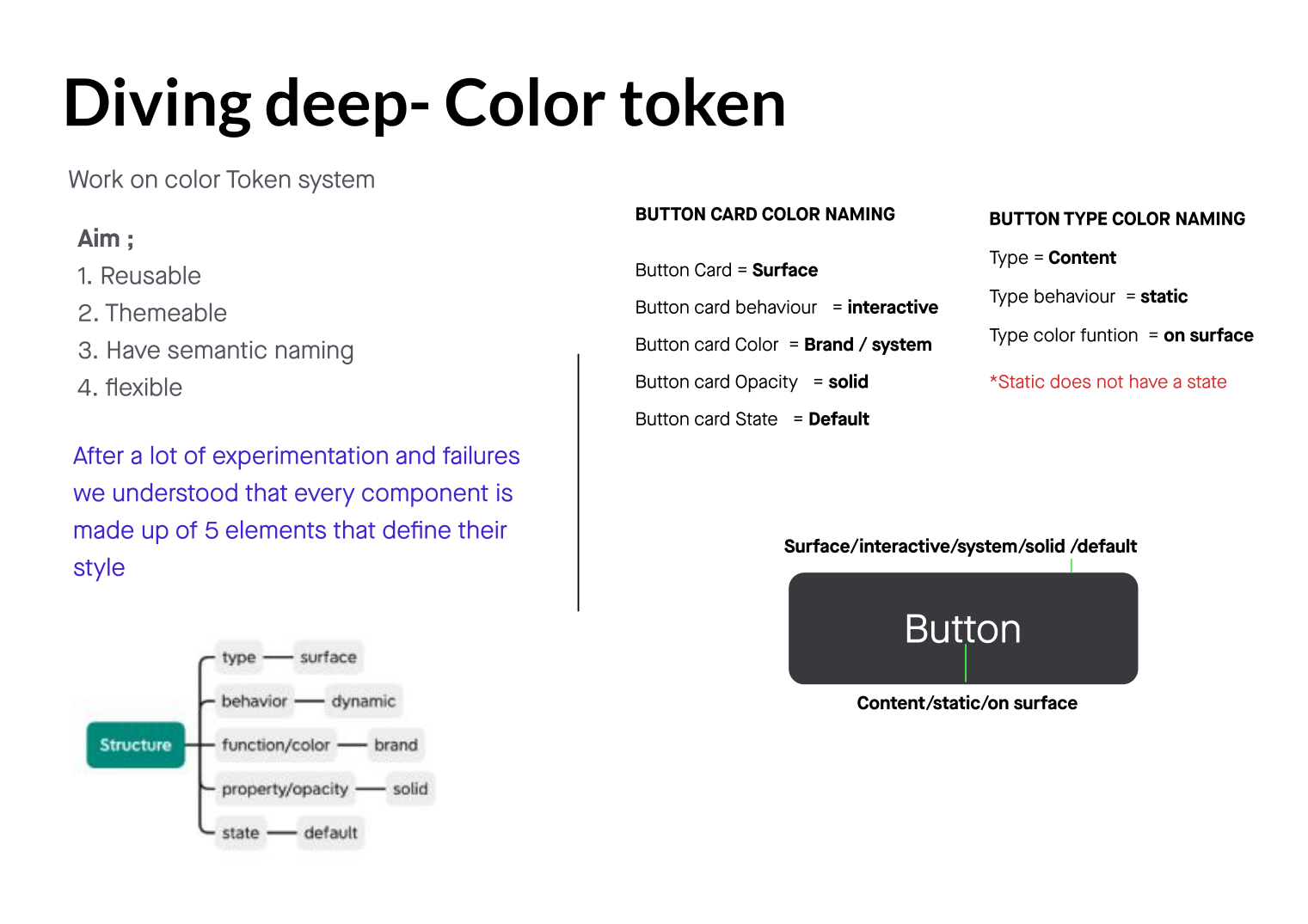
The colour system was the hardest and most valuable part. My aim was tokens that were reusable, themeable, semantic and flexible.
After a lot of experimentation and failures, we understood that every component's style is made of five elements: type (surface), behaviour (dynamic), function / colour (brand), property / opacity (solid) and state (default).
That gave us semantic naming we could read at a glance — a button card became
Surface / interactive / system / solid / default and its label
Content / static / on-surface. Names that describe role, not raw hex.
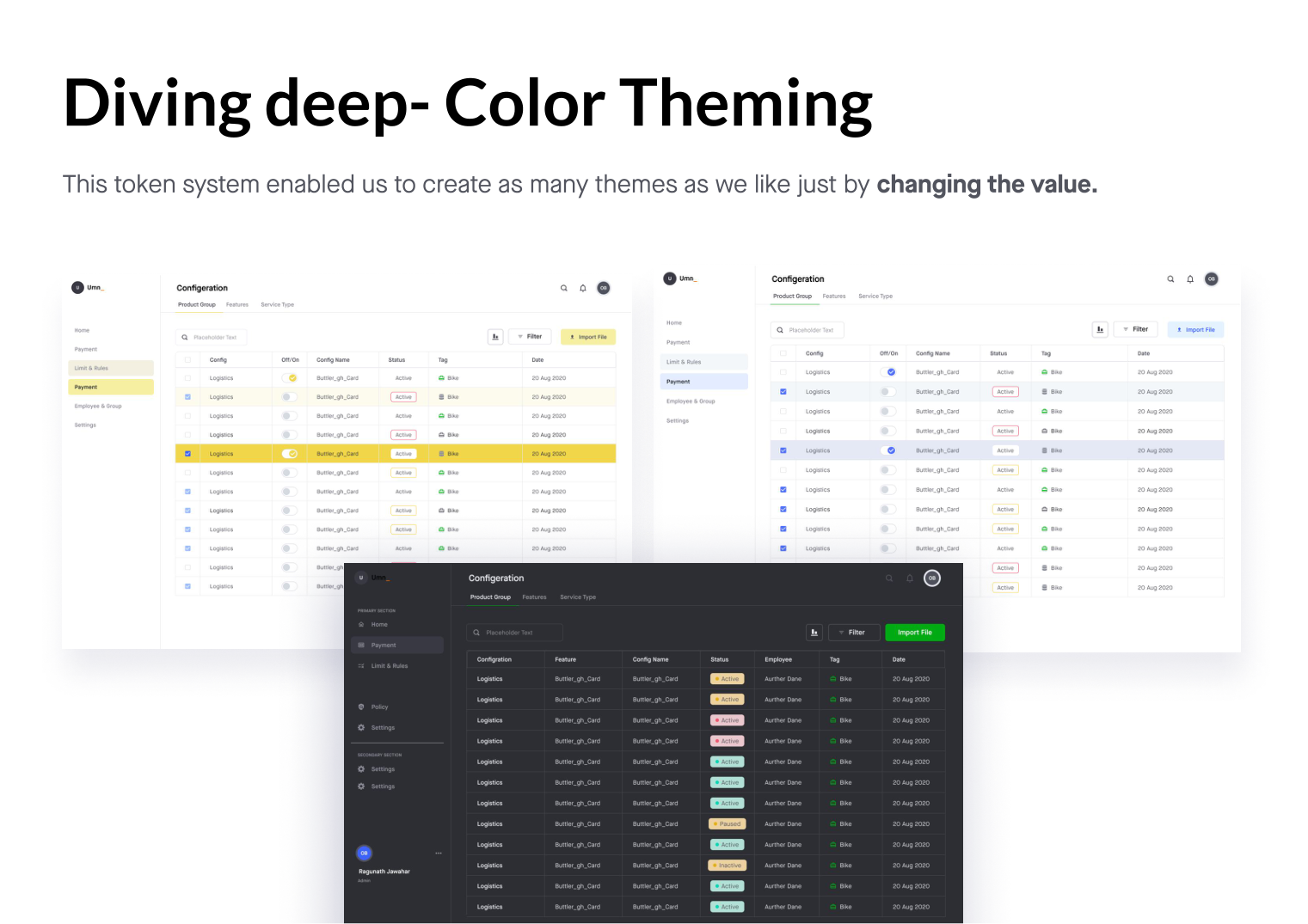
Because style was encoded as semantic tokens, the system could spin up as many themes as
we liked just by changing the value behind each token — including a real light and dark
mode the old system never had. We also chose generic naming conventions like
primary/100 (primary = charcoal colour, 100 = opacity) to keep flexibility in use.
A complete revamp of the design system — from look and feel to a token-driven, themeable foundation. I enhanced colour and typography, improved accessibility with detailed docs, and built components in collaboration with stakeholders. Crucially, it saved development time and cost for the devs working across products from internal to customer-facing.
Name the role, not the hex.— The principle behind the token system